Skip to content

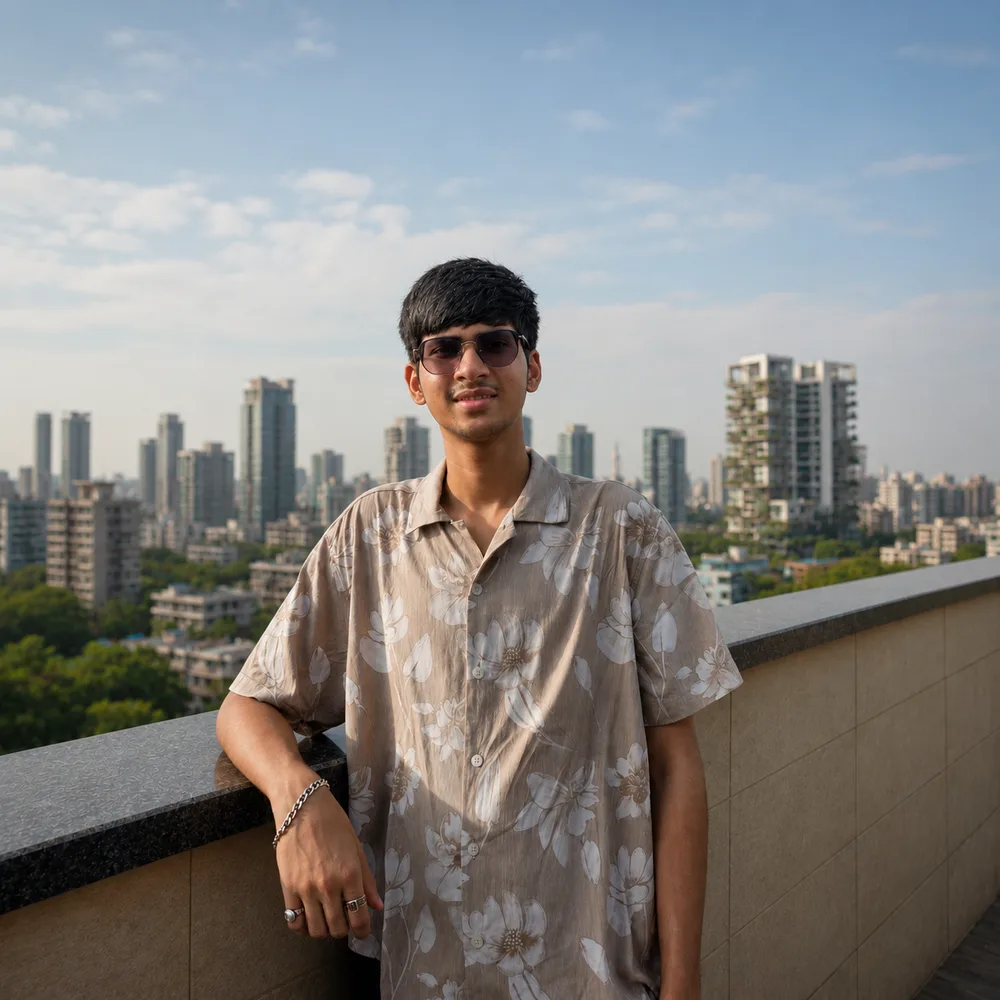
Atharva Patil. Software engineer, and about two years into a 3D animation degree.

Atharva Patil — head-and-shoulders portrait, navy shirt, warm indoor setting with a wooden shelf and plant in the background.

I run Northbyte Studios on my own, based in Navi Mumbai, India. I used to go by PainZ and Grim, both retired now. Everything ships under p4inz or my real name. 9 products shipped or in progress, 7 of them actively worked on, and no marketing team behind any of it. Just me.

For a while I thought I'd eventually have to pick one: software or 3D. I've stopped expecting that to happen. A UI that feels right and a render that feels right come from the same place: paying attention to the small stuff most people don't notice until it's wrong.

The short version

Why software and 3D, and why probably not stopping.

Software came first, and it started the usual way: taking apart things I owned until I understood them, then trying to fix or replace what annoyed me. Windows tools first, then small utilities, then products with actual users. That grew into a studio in 2025 (Obsidian Labs, at the time), and I renamed it Northbyte Studios in 2026 once it felt like something worth naming properly.

3D came in because software alone wasn't covering everything I wanted to make. I started a B.Sc. Animation program at D. Y. Patil University this year, which mostly just gave a name to something I was already doing on the side. Kanvaz exists because of that overlap — it's a reference tool I built for VFX artists because I'm one of them, not something I built to look interesting from the outside.

Almost everything I build ends up privacy-first and offline-first, usually without me planning it that way going in. Nexus doesn't sync to a cloud. Mission OS doesn't phone home. Pursue OS is for investigators who can't afford to leak metadata about who they're researching. Even this site runs on Cloudflare with nothing beyond Cloudflare's own privacy-preserving traffic beacon — no analytics script, no tracking pixel.

The part that's less fun to admit: I do all of this alone, so there's no one to catch what I miss and no one to help me move faster either. Some things take longer because of that. Other things stay more consistent than they would with five people making five different calls on the same product — most days I think that trade is worth it.

Timeline

The last two years, compressed.

  1. 2025 First studio (Obsidian Labs). Early Windows tooling. B.Sc. Animation program begins at D. Y. Patil University.
  2. Early 2026 Kanvaz released open source (MIT) as a reference workspace for the VFX community I'm part of.
  3. Mar 2026 Started building Nexus. It went public around a month later, once there was enough to actually show.
  4. Jun 2026 Kanvaz and Veris both in active development alongside Nexus — one open-source workspace, one investigation platform.
  5. Mid 2026 Northbyte Studios founded as the second (and current) studio name. Mission OS work begins.
  6. Aug 2026 Second year of the animation program. Portfolio migrated to Astro (v5.0). Pursue OS repository foundation goes public. Mission OS ISO enters internal testing.

What I actually believe

Things you can go check, not a values statement.

Every line here holds up if you actually read the installer copy, the ship notes, or the source for any product on this site.

No telemetry, ever

Nothing I ship phones home. Not "off by default," not compiled in at all. If a product wants to know something about you, it asks on-screen, and you can say no.

Explain what you're turning on

Secure Boot, TPM-sealed unlock, disk encryption, telemetry: every advanced option gets its benefit and its downside written right next to the toggle, not buried in docs. You should know what you're agreeing to before you agree to it.

Say what's actually true

Before I ship an update to this site, I check the claim against the real README or release notes. If something's only a concept preview, it says so. I've delayed a ship before because a status label on /status was already out of date.

I build all of it myself

The products, the case studies, this site's design system, the Mission OS demo, the résumé. One person, start to finish. Not a boast, just how the timeline works out.

Free when I can make it free

Kanvaz, Obscura, Glint, repo-map, 3D Ref Skills, Mission OS, and Pursue OS are all free, most of them open-source. Nexus and Veris are paid because running a one-person studio costs money, but they don't get a telemetry exception either.

For investors + collaborators

What this studio actually looks like from the outside.

Every number below is checkable — against the repos, or against the changelog on /status.

Products shipped or in flight
9
Open source (MIT / GPLv3 / Apache 2.0)
7
Automated tests across products
4,100+ (Veris 3,100 + repo-map 870 + others)
People between design and shipping
Just me
Third-party analytics on any product
0
External dependencies (this site)
0 — no tracking, no fetch calls at runtime

My bet is that a small number of privacy-first products, each finished properly, beats a bigger catalogue of half-finished ones. Most "growth" advice assumes ads and telemetry are free to add, and I'd rather not build on that assumption.

Nexus is the main commercial product, an encrypted vault for Windows. Mission OS is the bigger, slower bet: a privacy-first Linux distro built at OS scale. Kanvaz and Obscura are free and open-source on purpose, proof the studio actually ships rather than just talking about shipping. Everything else supports one of those three.

I'm not looking for growth marketing, an agency handoff, or a full team right now. What's actually useful: introductions to other founders, investors, or open-source maintainers who care more about the product being right than the product growing fast.

Current stack

What I reach for, and why.

I don't have one favourite language. I have projects that each demanded the right one and I picked deliberately.

C# / .NET 8 / WPF

For Windows-native products

WPF is the least-glamorous choice a modern .NET dev can make — and the right one for Nexus. Native windowing, real ClearType, no Electron bloat, integrates with Windows Hello and the Credential Manager the way users expect. Chose WPF over Avalonia specifically because Nexus ships Windows-only for now and I wanted to lean into the platform, not abstract it.

C# / .NET 8 / Avalonia

For cross-platform desktop tooling

When cross-platform matters (Glint, future Nexus port), Avalonia gets the exact same code running on Windows / macOS / Linux without hitting Electron. WPF muscle memory transfers over cleanly.

Electron + vanilla JS

For Kanvaz

Kanvaz needed to run everywhere a VFX artist works, and its whole surface is a canvas full of references — HTML5 canvas + drag-and-drop APIs mapped to that better than any native alternative. Vanilla JS on purpose: no framework churn, easy for anyone to fork and extend.

Debian Stable + KDE Plasma + Qt/QML

For Mission OS

Building an OS you want to trust means starting from something already trusted (Debian Stable) and building deliberately on top of the most polished free desktop environment (KDE Plasma). Installer + system apps in QML/Qt because they compile to native, look right at any DPI, and let the four-pillar ethos show up in the UI itself.

Astro 5 (this site)

For static content sites

This portfolio was a single 15.9MB HTML file through v4.7. It worked, but every edit meant scrolling through one enormous document. Astro gives me component-scoped CSS, real routes, and zero JS by default, and it deploys to Cloudflare Pages without any extra config.

TypeScript · Node · SQLite

For engineering-side tooling

Veris (3,100+ tests) and repo-map both live here. TS strict-mode, ESM-first, SQLite for anything that needs to be inspectable without a running server. Deterministic engines, not black boxes.

Identity

One person, several names, one canonical source.

Real nameAtharva Patil
Current handlep4inz — everywhere (GitHub, Discord, this site's byline)
Retired handlesPainZ, Grim — do not use, they don't map to me anymore
Current studioNorthbyte Studios · founded 2026
Previous studioObsidian Labs — 2025, retired when the current studio was named
LocationNavi Mumbai, India
Canonical sourceThis site — atharvapatil.tech

Working with me

Freelance capacity: selective, taking new work.

I take on independent client work in web development, UI/UX, branding, and 3D/VFX visualization. Scope tends to be one of three shapes:

  • Short-loop. A landing page, a marketing site, a brand touch-up. 1–2 weeks. Fixed price. Direct.
  • Product build. A dashboard, a real product surface, a tool that needs UI + backend + design. 4–8 weeks. Discovery week first.
  • Studio work. A 3D render, a lighting study, a promo animation. Scope by shot.

Everything I ship uses the same discipline you see across my own products: privacy-first, no telemetry, honest about what a first-shipping-version can and can't do. If that fits what you're trying to build, start a conversation.

Contact

Reach me directly.